Wednesday, 10 October 2012

Montreal gets another shot at professional lacrosse


When I arrived at the Bell Centre for a press conference to formally announce a National Lacrosse League pre-season game on December 15 between the Toronto Rock and the Rochester Knighthawks I looked around to see if Montreal Canadiens owner Geoff Molson was in attendance.  He does run evenko and the Bell Centre as well and with the Habs in lockdown mode, you figure he might have made an appearance. Then again, it is pretty clear that the only questions he’d be fielding would be about the progress of negotiations (or non-negotiations).
It has been 10 years since professional lacrosse last graced the floor of the Bell Centre. That is when the Montreal Express tried its luck and failed. On the eve of my 50th birthday I have better memories of the Montreal Québecois, which played at the old Forum in the mid 1970s and developed quite a following. My late dad took my brother and I to a few games and we loved the end to end action, the physical contact and the roar of the crowd. The team’s big star was named John Davis and former Habs enforcer, the late John Ferguson, actually served as head coach.
Martin Routhier, the former president of the Montreal Juniors, was working on bringing a franchise in a Canadian Lacrosse League to the Verdun Auditorium last year. It did not pan out. Now he is on board as the promoter of this event and by all indications it will be a big success.
The Rock play before crowds of 11,000 plus fans each game in Toronto.  NLL Commissioner George Daniel made no secret about the fact this game could serve as a prelude to Montreal getting a franchise. Pierre Filion, the impeccably bilingual director of the Quebec Lacrosse Federation, brought with him a Montreal Québecois jersey and noted that in only four days he had sold 1,500 tickets to local lacrosse associations for the December 15 match.
Filion displays his Québecois jersey.
“A professional team contributes significantly to the local development and visibility of a sport and lacrosse is no exception,” Filion said. “The sport is experiencing a rapid growth  in popularity in North America, Europe and Asia. This is a growing trend and Quebec has all the groundwork in place to enjoy this rise in popularity. The possible arrival of a professional lacrosse team in Montreal will help launch further development of the sport.”
There is no question that Molson will be paying close attention to this game as he is  the logical owner for a new franchise, which costs $3 million.
If the NHL lockout continues through December, which appears to be a distinct possibility right now, I predict a very good crowd for the game. As for the league, Daniel was polite when asked if the lockout would be good for his product if it continues past January 2013 when the NLL regular schedule gets underway. “Well,” he said, “three of our owners also have NHL teams so I have a mixed reaction. But an opportunity to get a little more exposure is a good thing.”
Garrett Billings
Toronto Rock owner Jamie Dawick and star player Garrett Billings were on hand at the press conference.  Billings had an incredible 35 goals and 96 assists in 19 regular season games last season.
There is no question that many sports fans here are starving for action. Yes, this lockout is absolutely ridiculous! Why do the owners allow their dictator of a commissioner, Gary Bettman, to dig such a hole for them and the league? Why are the players not pushing Donald Fehr to broker a deal? If Bettman cancels the January 1 Winter Classic, then we can kiss the 2012-2013 season good-bye and events like lacrosse will become financial windfalls.
Tickets go on sale on Saturday, October 13 (9 a.m.) at the Bell Centre box office, by phone (514-790-2525 or 1-877-668-8269) or online at www.evenko.ca. Prices are $33.50, $45.50 and $65.50 (service fees included).
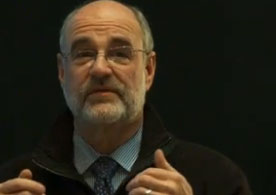
 Here is my video interview with Garrett Billings.


Below  Billings scores a terrific goal.


Thursday, 4 October 2012

Former Montreal Health Authority boss David Levine talks to Healthcare Quarterly


I really enjoyed this interview with David Levine in  Healthcare Quarterly, so I am sharing it with readers on my blog.
Levine is a rare bird: an anglophone Jewish sovereignist who has worked for the PQ in the past and even ran for them as a candidate. I am sure Premier Pauline Marois has something planned for him.

David Levine

Insight
In Conversation with David Levine


After 10 years at the helm of the Montreal Health Authority, David Levine, no stranger to the politics and challenges of leadership in healthcare, stepped out of the limelight to regroup. A seasoned leader, nationally recognized by peers as a thought leader, Levine's academic training started with civil and biomedical engineering. After his shift to healthcare, his career path included leadership at some of Canada's largest healthcare organizations. Amidst that journey, he served as Quebec's delegate general in New York City and tested the political waters at the provincial level. Never short of commentary and thoughts for improving healthcare in Canada, Levine shared his reflections with Ken Tremblay this past summer.
HQ: What did you enjoy the most and least about your experiences with the Montreal Health Authority?
DL: What touched me the most was that I was managing a system as opposed to an organization. I had managed smaller institutions and very large hospitals and completed mergers. Now I had the opportunity to manage the whole system, but not from a traditional regional authority perspective. In the Montreal model, each institution retained its own chief executive officer (CEO) and board, so the regional authority was sandwiched between the ministry and the institutions. The challenge was to navigate [change] within that environment.
In 2005, we integrated many of our institutions, from over 70 institutions, each with their boards and CEOs, to 12. Each of the 12 became part of an integrated network on the island of Montreal, with services ranging from community and primary care to hospital to home care and long-term care services. [System] integration through reform was one of the most important experiences.
The difficulty? Things move slowly in healthcare. Changing the system is a real challenge; there are a lot of embedded, cultural biases. That's what we have to work at.
HQ: Did you find hospital boards an asset in your model?
DL: I found them an asset. It was very important to have CEOs with their boards, volunteers looking at quality, keeping the focus on the patient and challenging their CEOs. Because CEOs reported to their boards, versus my directors, that was a help. The hindrance was that it was much harder to introduce consistent change; CEOs became more concerned for their organization than the health system.
HQ: Many of the presentations you made offered a compelling vision for Montreal's healthcare system. Looking back after 10 years, what did you get right and what might you reconsider?
DL: The vision for healthcare in Montreal was to integrate services, to remove silos of care within the system and to better integrate primary care, hospitals, home care, long-term care and mental health and social services into one organization. Creating the 12 population-based healthcare centres on the island was a very important structural change toward a better healthcare system. After that, we made clinical changes: getting professionals to work together in multidisciplinary teams across the continuum of care. That change was far more difficult than the structural changes – those efforts continue to today.
The other challenge was to transfer activities and services from hospitals to the primary care/community care sector. Changing how hospitals and the hospital system have been performing for over 40 years is much more difficult, given their embedded cultural biases. For example, psychiatrists and mental health professionals are very reluctant to transfer their complex patients to community health teams; they want to keep them under their wing. However, if you don't make the transfer, the system remains the same – top heavy. [It's the same] with chronic conditions: we don't allow for life-to-death care through the primary care system. That kind of change is really important, more difficult, and you have to be very persistent.
HQ: Any integration effort that didn't work out for you?
DL: We had difficulty with mental health (which I mentioned), and some work has yet to be completed, that is, the resource transfers between hospitals and community agencies. The integration of care between primary care providers and hospitals is not yet done. Primary care physicians still don't have easy access to technology or easy access to specialists needed to make diagnoses, and they still spend a lot of time hunting down results. That connection has not yet happened. Similarly, primary care services and community services – social services and home care – are not yet well integrated. The result: we still have primary care teams disconnected from and lacking easy access to our healthcare networks and the hospitals.
Hospitals are resistant [to change] as well when they say, "We want to take care of our in-patients first." Patients coming from the primary care sector tend to wait for diagnostics and access to specialists.
HQ: Notwithstanding those gaps, Quebec's approaches to health system integration have led the country. What parts do you think would be transferable to other jurisdictions?
DL: The regional integration of health and social services is really essential. Then you have to ask, how do you manage care? We need patient rostering of primary care and then a really strong multidisciplinary team that can share the care and help manage the physician [workload]. If we can do that, we will begin to have a managed healthcare system that will reduce costs, reduce use and demand, allow for the autonomy of individuals and facilitate self-management. Those are some of the things we've been working on. Quebec has made some very strong moves in the reform area; it's important that we learn from each other.
HQ: Many of us recall the healthcare system in Ontario in the wake of the Restructuring Commission and the directions it made for Ottawa. How did your experiences in Ottawa shape your approach to change management for the health system in Montreal?
DL: My experience in Ottawa made it very clear to me that if you want to succeed, you must focus on the patient. For example, by [repurposing] the Riverside site rather than closing it, we were able to gain the support of physicians, management, staff, the community and even the media. Because we focused on the patient and found a winner, people supported our moves with other issues [associated with] the merger: How were we going to divide up services? What services would be offered, and in what location? How were we going to regroup physicians? That's what I got from the Ottawa experience.
HQ: Your career made a turn when you became the province of Quebec's delegate general in New York City. What factors motivated you to go in that direction and then shape your return to healthcare?
DL: The then minister of health wanted to merge Notre Dame with two other academic centres, Saint-Luc Hospital and Hotel-Dieu Hospital, with the idea that I would become the CEO of the new organization; however, it became clear that selecting one of the existing CEOs was not the best idea. The government asked if I would like to do something new for a while – the delegate general position – and I accepted it as both a challenge and something new and different. I stayed there for about a year and a half and, although I found it fascinating and very interesting, my real interest remained healthcare. When a head hunter contacted me about the opportunity to [consummate the merger] in Ottawa, I thought that challenge would be very exciting and, in the end, accepted it.
HQ: As you note, engaging physicians during change is often a challenge. What has been your experience with physician engagement during system integration strategies, and what has worked best for you?
DL: The first challenge is to get the primary care physicians involved in primary care teams. Over the past decade, we established about 55 teams on the island. Because Montreal is divided into 12 territories, we set up 12 physician councils that, in turn, sent one leadership representative to an executive committee for the region. The councils were very helpful in getting the physicians in their territory to work together, and they became an official body to work with the specialist groups (because we have another council of specialists of the island, that is, the departments from our various institutions). Those two groups work together to develop a better bridge between the primary care sector and specialized services.
[For this to work], you have to be very present and provide incentives. It is not the "big bang" theory – this can't happen overnight. It is a journey that moves physicians along a road at a pace they can absorb. I became quite close with the Federation of General Practitioners. When we developed our primary care centre, physicians participated in its creation and selected the ratio of professionals to physicians [for the model]. We had a lot of work to do: how would we move to a shared care model? We knew if we didn't go down that route, we wouldn't increase the [clinical] capacity of general practitioners. As our population becomes older, we need to find ways of increasing general practitioners' capacity. Shared care is part of the answer.
HQ: Academic health sciences centres are under fire these days – institutions we love to hate. What would you say to policy makers as we shift the cost curve away from hospitals and academic centres to these community-based models?
DL: They truly need to embrace this concept and accept [the notion] that the academic health sciences centre must not become a volume-driven environment; that payment of physicians by volume generates a desire to place outpatient clinics in hospitals, causing a multitude of primary care/specialists contacts; and that primary care should be in the community. Teaching hospitals still want large emergency rooms; they should have very small emergency rooms. They should work more like American teaching hospitals: use satellite facilities and take on only the more complex cases. Keep enough activity to support training you need at the primary and secondary levels, but make this a small part. Try training in the community hospitals. There's a great opportunity here, but there needs to be a change in mindset.
HQ: What advice would you give to someone just starting a leadership career in healthcare?
DL: Be patient focused in everything you do, and ask yourself, how is what I'm doing going to ultimately affect the patients? That's number one, and it will always keep you guided on the right track. Second, understand the zones of power and influence in your environment, both internal and external, be they physicians, nurses, unions, board members, foundations, media or government. Understand these groups, their leadership and their interests, and adapt. Focus on patients and engage these groups.
It's very important to really understand the physician group. They are and will remain strong, strong leaders in the system. The nursing side of our system has not been given the leadership opportunities that they should have. A lot of change in the healthcare system could come from nurses: they have regular contact with patients every single day and understand [patient] care. So, focusing on these two groups would be very important.
HQ: You did something few healthcare administrators have done – you openly declared your political stripes. How did your experiences shape your views on the politics and policies shaping healthcare in Canada?
DL: [When] managing in healthcare, you are managing at the organization and service levels. At a system level, such as a regional health authority, you try to manage at a system [level]. Because Canada's [system embraces] public administration – not only of health insurance but also of the delivery of services – governments are very much involved in healthcare. Thus, we have a lot of politics in almost everything we do.
Some [healthcare] decisions are made for political reasons. As managers, we have to be aware that this is the context of Canadian healthcare, whether at the municipal level or riding or right up to the ministry. I went into politics – for a very short period of time, I was a minister – and realized that it is a very difficult position; you have many masters and have to respond to a lot of different pressures.
I enjoyed the hands-on roles more than the system [roles]. At Notre Dame, my office was right in front of radiology. I could see all the patients waiting to go in and was able to talk with them, making me feel much closer to the delivery of care. I enjoyed that the most. As you move up, certainly at the political level, you become more distant and influenced by other factors.
HQ: Some people might argue that the healthcare system is so political that it makes management virtually impossible. What would you say to people who are trying to balance the politics of healthcare with the right management decisions?
DL: You have to learn to live with that reality and best adapt to it. Politics can block certain decisions and can move money into areas that you, as a manager, don't feel are the best for the system or are for political reasons. One has to learn how to adapt to that and get the most for the patients whom you are trying to serve. The barriers within public administration are there, and you have to live with them.
Why is healthcare being managed by the political system? The Canada Health Act requires public insurance, a single payer, and the management of that single payer through public administration. Governments have said, "If we're going to receive and spend 50% of the money, we had better be the ones managing it." Once they decided that, politics became very much involved.
It's the number one issue for Canadians, in elections, in the media. The media often use healthcare as a lens for political parties, governments or an individual minister. That's why managers have to be very aware [of the issues] and have an excellent communication team. [You have to] be close to the players, create relationships, etc. so that you can present your points of view clearly. Have strong board and community support for your position. Let politicians see that there is strong and broad community support. Those are the things you need to do.
HQ: What do you hope your leadership legacy will be as you reflect on your career?
DL: In 1986, our Hospital in the Home project put physicians and hospital beds into the home to alleviate pressures on emergency rooms. From that activity, extensive home care services grew, such that we can do a lot more in the home today than we did in the past. Generally speaking, the move to primary care is the key to a successful healthcare system. That's what I hope to work on: building a better bridge between the hospital and the primary care sectors.
When I was president of the association of CEOs in Quebec in the 1980s, I stated that we had too many acute care beds and that we should reduce the number of acute care beds because our lengths of stay were too long. CEO colleagues almost strung me up for those comments. Five years later, we closed seven hospitals on the island of Montreal and reduced a large number of beds. We were able to get lengths of stay down and become more efficient. I believe in [gaining greater] efficiency of the system and think there's still a lot more we can do.
I hope people see me as a healthcare manager, someone committed to the healthcare system and continually working to improve it. When I meet [former] students and they say, "Oh, I remember your class," that sparks my desire to go back to do some teaching.
HQ: What is next for David Levine?
DL: I'm looking at the healthcare system differently. I don't know whether I want to go back to running another large organization. I had my first CEO position when I was 26 years old, so I've been doing this for 37 years. I love it. I think I can get my message across through teaching, meetings, working with various groups across the country – that might well be the next step. I still feel raring to go for the next couple of years.
HQ: Thank you.

The Justin Trudeau-Stéphane Dion-Thomas Mulcair connection: will Justin exact sweet revenge?

It will be interesting to see whether St. Laurent-Cartierville Liberal MP Stéphane Dion will come out in support of Papineau MP Justin Trudeau's bid for the Federal Liberal leadership.

Justin Trudeau
Dion accidentally became the  Liberal leader in 2006, an action which is chiefly responsible for the rump of only 35 MPs in office today. Why did he run? We will never know. How did he win? The party system made no sense. Dion made many errors as Liberal leader, but none worse than imposing journalist Jocelyn Coulon as the party's candidate for a September 2007 by-election. Jean Lapierre had stepped down as the MP in what was a huge Liberal stronghold. The obvious choice to carry the party banner was Justin Trudeau. A slam dunk in Outremont for sure. Dion insisted that Coulon was the best choice.
Dion asks, "How the heck am I still in office?"

At this time, Thomas Mulcair had recently stepped down as a Quebec Liberal Member of the National Assembly and environment minister and was flirting with the possibility of joining tge Federal NDP. When I spoke with him soon after Lapierre's resignation, he seemed inclined to wait for the next general election and run in his familiar territory of Laval. The NDP had only once before elected an MP from Quebec (Phil Edmonston in a 1990 by-election). Dion, though, handed Mulcair and the NDP a huge gift in Coulon. Mulcair did indeed agree to run there for the NDP. Coulon bumbled his way through the campaign, infuriating at one point the influential Jewish vote.
Jocelyn Coulon; How do you spell d-i-s-a-s-t-e-r?

Mulcair trounced Coulon, 48 to 29 percent, and set the stage for a true NDP presence in Quebec. Justin Trudeau, meanwhile, had to take the tough road of competing for the Liberal nomination in the then Bloc Québecois held Papineau riding and then winning a seat. He did all of that. But was it really necessary? Why didn't Dion proclaim Justin as the candidate automatically in Papineau?

Justin has always had true star power. Had Dion placed in Outremont to begin with, Mulcair may have never become an NDP MP, the architect behind their Quebec sweep in May 2011 and now party leader. Then again, without the NDP we would not have gotten rid of the nasty Bloc Québecois. Justin is indeed the front runner to win the Liberal leadership in April. The next federal election will be in three years and wouldn't it be ironic to see Justin facing off against  Mulcair.
Thomas Mulcair:  He owes Dion

Perhaps Justin will be able to exercise his own candidate selection process and bid adieu to Dion in St. Laurent- Cartierville. One good turn does deserve another!


Thursday, 13 September 2012

Industry Minister Christian Paradis' address to West Island Chamber of Commerce


The Honourable Christian Paradis, PC, MP

Minister of Industry
Montréal, Quebec

September 10, 2012


Good morning.

Thank you for the kind introduction.

It is always a pleasure to be in Montréal.

Mesdames et Messieurs, depuis que je suis devenu ministre de l’Industrie, j’ai sillonné le pays et visité plusieurs villes, grandes et petites, afin de rencontrer des regroupements de gens d’affaires comme le vôtre.

J’ai pris part à des tables rondes régionales et j’ai discuté avec des représentants d’entreprises pour me renseigner de façon directe sur les possibilités d’affaires et les défis auxquels les Canadiens font face.

Les regroupements comme le vôtre représentent des organes vitaux du milieu des affaires au Québec. Votre engagement dans le milieu est à l’image du véritable esprit d’entreprise qui existe partout au Canada et au Québec.

Ladies and gentlemen, when we look outside our borders, uncertainty continues to affect the global economy.

Last month, I was with Prime Minister Harper when he hosted German Chancellor Merkel.

We all know that Europe faces some serious challenges, such as persistent unemployment, weak growth and burdensome sovereign debt. But these are not their challenges alone; they are faced by the global economy as a whole.

Even in emerging economies like India, China and Brazil, strong currencies and slower growth present new challenges. So when we look at Canada’s position in the world, we can be proud.

Le Canada possède de nombreux avantages : un gouvernement fort et stable, une stratégie économique viable à long terme, un engagement ferme et tourné vers l’avenir en matière de libre-échange, une cote de crédit triple A, et un plan budgétaire solide visant à rétablir l’équilibre fiscal à moyen terme.

Mesdames et Messieurs, le Canada est au premier rang des pays développés. Nous sommes un pays de choix pour les investisseurs et nous sommes ouverts aux échanges commerciaux. En outre, nos efforts ont été reconnus à l’échelle mondiale par des organismes comme le Fonds monétaire international, l’Organisation de coopération et de développement économiques, le Forum économique mondial et le magazine Forbes.

C’est maintenant qu’il faut tirer profit de ces avantages. Nous devons également nous assurer que nos remarquables entrepreneurs, inventeurs et innovateurs possèdent les outils dont ils ont besoin pour prospérer à l’échelle nationale et internationale.

And while you each have your own challenges and opportunities, the context in which we all work is becoming more global.

Our world is becoming more digital and more connected.

For Canada to succeed, we will all need to be fully engaged in this new world. This means investing in innovation and research and creating new products and services.

And it begins with fostering one of the most attractive economic environments in the G‑Seven.

But it does not end there.

So far I have spoken about Canada’s strong foundation for economic growth.

But that is only half of the equation.

Ultimately, to create jobs, to grow and to maintain our prosperity over the long term, we cannot work independently. We—academia, governments and the public and private sectors—need to work together.

C’est bien simple : nos provinces et nos territoires doivent accorder dès aujourd’hui la priorité aux compétences de demain dans leur système d’éducation. Nos cégeps, nos collèges et nos universités doivent collaborer de plus près et conclure plus de partenariats avec le secteur privé.

L’industrie doit générer davantage d’investissements privés, en particulier dans le secteur du capital de risque de démarrage, et soutenir la création de fonds de capital de risque de grande taille. Enfin, les entreprises doivent favoriser l’innovation dans les produits et services, et ce, dans tous les secteurs de l’économie.

En tant que nation, nous devons prendre des risques accrus, réfléchir de manière plus créative et agir avec plus d’audace afin de prendre la place qui nous revient au sein de l’économie mondiale.

Nous avons tous un rôle à jouer, et il est essentiel d’unir nos efforts. Mais je tiens à le préciser, le rôle du gouvernement consiste à créer les conditions nécessaires pour que nos meilleurs éléments puissent réussir dans leurs entreprises. Le gouvernement doit ensuite se retirer et les laisser agir.

In August, I had the opportunity to participate—here in Montréal—in a round table of young entrepreneurs in high-growth firms. I heard about their priorities and was inspired by their successes in developing their ideas, raising capital, finding distribution channels and expanding to new markets.

Growth and job creation in today’s modern economy start with businesses, not government. They start with companies creating new products, finding new markets, improving productivity and doing business differently.

In this day and age, the pace of R&D and the evolution of business strategies are so rapid that innovation must be a part of every sector of our economy. Growth depends on innovation, which will be led by people like you here today.

And it will be innovation that propels Canada’s future high-growth firms.

Nous n’avons qu’à regarder Motion Composites Inc., une entreprise québécoise locale.

Cette entreprise, qui a été fondée par deux récents diplômés en administration des affaires et en génie, est née du désir de repenser complètement le concept du fauteuil roulant conventionnel afin d’alléger son poids de moitié, d’augmenter sa durabilité et de rendre son prix plus abordable.

Leur concept était prêt, mais ils avaient besoin d’aide pour fabriquer et commercialiser leur produit.

C’est là que le Programme d’aide à la recherche industrielle du Conseil national de recherches du Canada (le PARI-CNRC) est entré en jeu.

Pour ceux qui ne le savent pas, le PARI est le principal programme d’aide aux petites et moyennes entreprises mis sur pied par notre gouvernement.

Ce programme est la pierre angulaire du régime d’aide à l’innovation au Canada. Près de 8 000 entreprises un peu partout au pays, dont 2 000 ici au Québec, bénéficient de son appui chaque année. Le PARI est considéré comme l’un des meilleurs programmes en son genre au monde.

Thanks to the help from IRAP, Motion Composites was able to refine its design, work out technical issues and raise additional funds from private capital and other sources. It went from the design stage to the production stage in twelve months, thanks in part to IRAP.

Today, Motion Composites manufactures about fifteen hundred wheelchairs each year. It has a team of seventeen permanent employees and plans to expand throughout North America.

This is a great example of a government program delivering needed support to entrepreneurs looking to grow their business.

But let’s be clear: while IRAP helped Motion Composites to develop and gain traction, the company created its own success.

Through Economic Action Plan Twenty-Twelve, we are continuing to make important investments like this.

Specifically, we are providing one hundred and ten million dollars per year to double the support for IRAP.

This will continue to spur business-led innovation and R&D and continue to bring real benefits to communities across the country.

En plus du PARI, le CNRC a mis au point un nouveau programme pilote conçu spécialement pour aider les entreprises à s’adapter et à prospérer dans l’ère numérique.

Le Programme pilote d’adoption des technologies numériques est l’une des plus récentes initiatives du gouvernement et s’inscrit dans notre engagement continu en matière d’économie numérique.

Ce programme permet aux petites et moyennes entreprises de recourir aux services d’experts-conseils.

Il les aide aussi à intégrer les nouvelles technologies numériques dans leur modèle de gestion.

L’intégration des nouvelles technologies contribue à améliorer la productivité et à stimuler l’innovation au sein des entreprises. Les entreprises peuvent en outre accéder à de nouveaux marchés en ligne au Canada et à l’étranger.

Par ailleurs, nous investissons 400 millions de dollars afin d’offrir du capital de risque à l’intention des entreprises en démarrage et de créer des fonds de capital de risque de grande taille.

Ce montant s’ajoute aux 100 millions de dollars que nous avons versés à la Banque de développement du Canada, qui a son siège social ici à Montréal.

Dans l’économie d’aujourd’hui, les entreprises ont besoin d’un accès accru au capital de risque afin de mettre en marché leurs produits et services. Et notre gouvernement effectue aujourd’hui les investissements nécessaires pour aider à bâtir l’économie de demain.

Ladies and gentlemen, as Canadians, we can and should count ourselves fortunate.

We have accomplished a great deal. We have shown the world the strength of the Canadian economic model. But to sustain this, and to carry it forward, we need the hard work, talent and investments from people like you.

Je crois sincèrement que lorsque nous travaillons tous ensemble, nous pouvons surmonter tous les obstacles.

Je vous remercie.